A dog jumping up may be intended as a friendly greeting, but it can be uncomfortable, frightening or unsafe for visitors. Children, older people and anyone carrying hot drinks or bags may be especially vulnerable. Teaching a calm alternative creates more relaxed arrivals without removing the pleasure your dog gets from greeting people.
Why do dogs jump up?
Dogs often jump because they are excited and want attention. If people look at them, speak to them, touch them or push them down, the dog may still experience this as interaction. Even occasional attention can keep the behaviour going.
Jumping can also increase when a dog has been waiting behind a door, becomes frustrated by a barrier or has not yet learned another way to greet. The goal is to prevent repeated jumping while making calm behaviour more rewarding.
Decide what you want your dog to do instead
“Do not jump” does not tell your dog which behaviour will earn attention. Choose a clear alternative, such as keeping four paws on the floor, sitting, standing calmly or going to a mat. Select something your dog can perform comfortably even when excited.
Practise before real visitors arrive
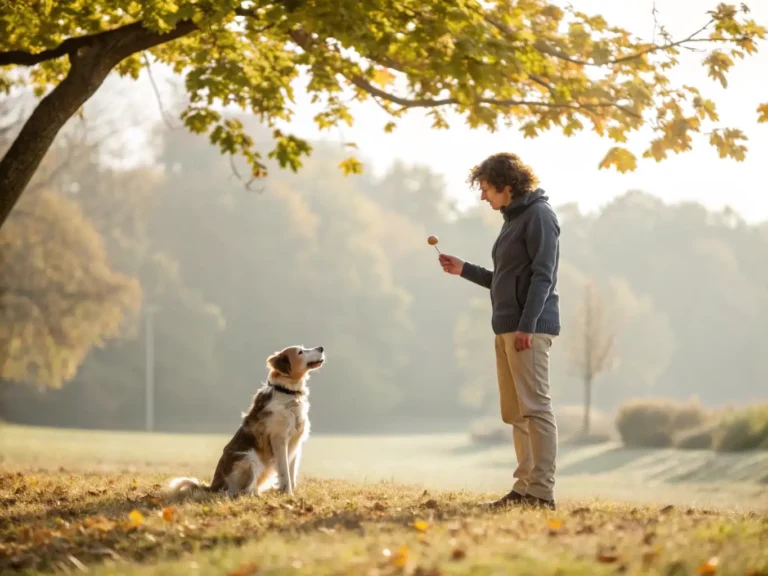
Training is much easier when the situation is controlled. Ask a family member to approach calmly. Reward your dog while all four paws remain on the floor. If the dog jumps, the person should quietly step away or remove attention. As soon as the dog is calm, the opportunity to greet can return.
Keep practice sessions short and repeat them with different familiar people. Begin with low-key greetings before attempting excited arrivals.
Teach a reliable place or mat cue
A mat gives your dog a clear position away from the doorway. Teach this when nobody is arriving. Reward your dog for stepping onto the mat, then for remaining there for gradually longer periods. Add the doorbell or a gentle knock only when the basic behaviour is reliable.
During early visitor practice, give your dog a chew or deliver small treats on the mat to make calm behaviour worthwhile.
Manage the doorway safely
Management prevents your dog rehearsing jumping while training develops. A lead, stair gate, separate room or greater distance from the door can help. This is not a punishment; it allows everyone to enter safely and gives the dog time to settle before greeting.
If using a lead, attach it to suitable equipment and supervise your dog. Avoid pulling or jerking them away from visitors, as this may add frustration or discomfort.
Give visitors simple instructions
Visitors can unintentionally undermine training by encouraging jumping or saying they do not mind. Explain the plan before they enter. Ask them to wait until your dog has four paws on the floor, greet calmly and pause attention if jumping starts.
Consistency matters. If jumping earns attention from some people, the behaviour may remain persistent.
Reward calm behaviour throughout the visit
The initial greeting is not the only difficult moment. Your dog may jump again when a visitor stands, returns from another room or prepares to leave. Continue rewarding calm choices and use the mat whenever excitement increases.
What should you avoid?
- Shouting, kneeing or physically pushing the dog away
- Giving attention while saying “get down” repeatedly
- Expecting a perfect greeting without prior practice
- Allowing some visitors to encourage jumping
- Keeping the dog too close when they are unable to settle
- Punishing behaviour caused by fear or anxiety
When jumping is part of a wider problem
If your dog barks, growls, hides, becomes highly distressed or struggles to recover when people enter, the behaviour may require individual assessment rather than general greeting practice.
Maisie’s Dog Training offers positive one-to-one dog training and obedience support across Redditch, Bromsgrove, Hanbury, Droitwich and Stratford-upon-Avon. Contact us for a plan tailored to your dog and household.